
Why 2026 Has Become the Most Challenging Year for Thailand's Real Estate Market
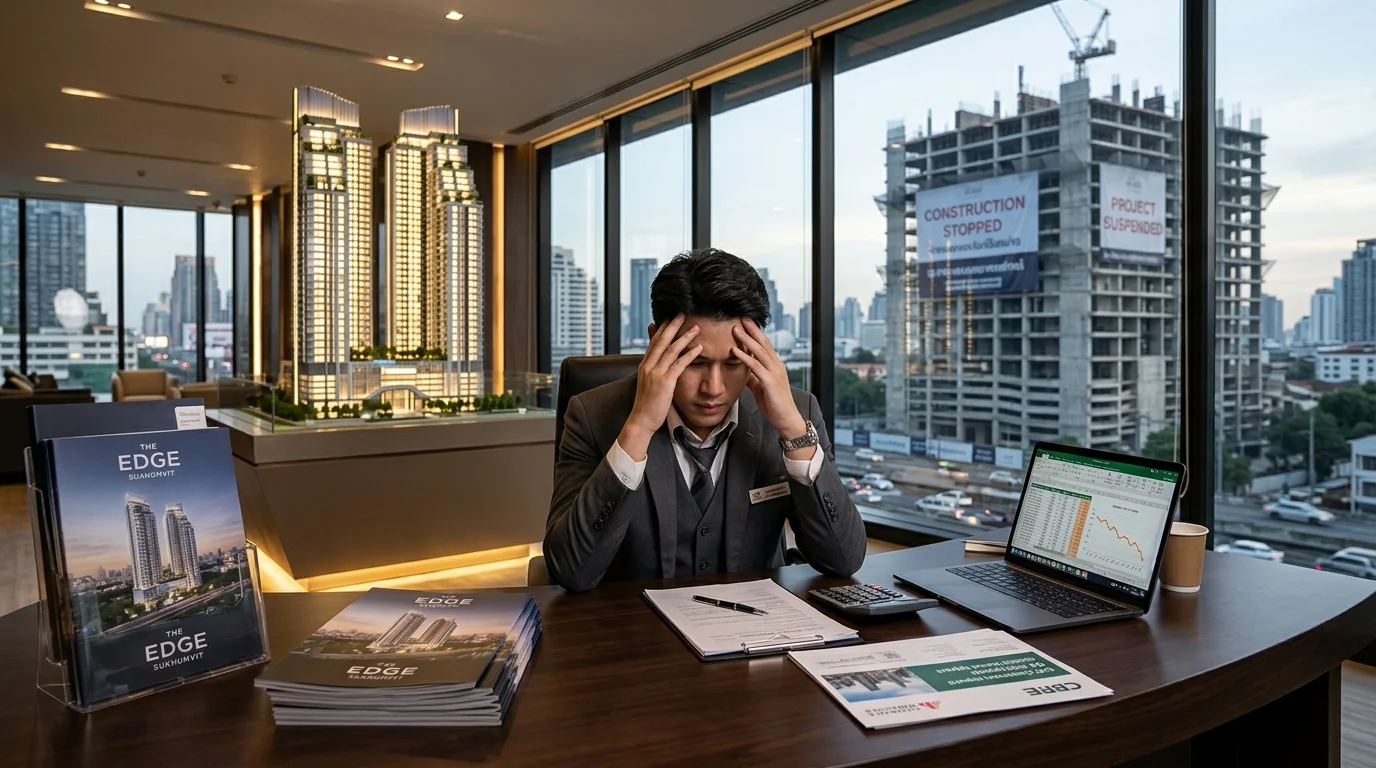
According to consulting agencies Cushman & Wakefield and CBRE Thailand, Bangkok's condominium market in the fourth quarter of 2025 contracted by more than 50% compared to the same period of the previous year. For the first time in a decade, developers shifted from large-scale construction to selling off remaining inventory. The volume of new launches in 2026 is projected at no more than 15,000 units-the lowest since 2015.
The reasons are simple: high household debt, tightening mortgage conditions, and political instability. Developers are changing their strategy: instead of mass-market housing, the focus is shifting to low-rise complexes and premium projects with shorter sales cycles. For buyers from Russia, this means a narrowing of choices in the affordable segment, but expanded opportunities in the upper price range.
Numbers That Explain the Decline
According to the CBRE Thailand report for the first quarter of 2026, the average price per square meter in new condominiums in Bangkok rose to 108,000 baht, but the number of transactions fell by 23% year-on-year. Developers reduced the launch of projects priced below 100,000 baht per square meter-precisely the segment that was popular with middle-class foreign buyers.
In Pattaya, the situation is softer. The volume of new offerings decreased by 18%, but demand from foreigners remained stable. According to Kalinka Thailand, the share of Russians among property buyers in Thailand rose to 31.2% in the first quarter of 2025-the highest in five years. Pattaya accounted for 21.1% of all applications from Russian buyers in 2024, which is 38.2% more than a year earlier.
The reason for Pattaya's resilience is the resort nature of the market. Buyers are guided not by Thailand's domestic economy, but by tourist flow and rental yield. Thailand's Ministry of Finance forecasts 36.5 million tourists in 2025 and a return to the 40 million mark in 2026. This supports demand for short-term rentals and limits price declines.
How Prices Are Changing in Pattaya: Data by District
Primary market prices in Pattaya in 2026 show mixed dynamics. In central districts-Central Pattaya and Pratumnak-the cost per square meter in new projects holds at 85,000-120,000 baht. Limited land supply and proximity to infrastructure prevent prices from falling, even with declining overall sales volume.
In the Jomtien and Na Jomtien areas, the average price is 70,000-95,000 baht per square meter. New complexes are being actively built here with a "resort living" concept-pools, fitness centers, restaurants, and private beaches. Developers offer flexible payment schemes and guaranteed rental income for the first 2-3 years, which attracts investors.
East Pattaya remains a growth zone for family housing: houses, villas, townhouses. Prices here start from 4.5 million baht for a house of 120-150 m² with a plot. The development of international schools and shopping centers increases interest from expats planning long-term residence.
The secondary market shows greater flexibility. Sellers are willing to reduce prices by 5-10% to close deals faster. Studios of 28-35 m² in the Jomtien area can be found for 2.5-3.2 million baht-8-12% cheaper than a year ago. For cash buyers, this is a window of opportunity.
Why Developers Are Scaling Back Mass Construction
Thailand's economy is growing slowly. According to international institutions, the country's GDP in 2026 will increase by 2.3-2.8%-below the Southeast Asian average. Domestic demand is limited: households are overloaded with credit, and banks have tightened requirements for borrowers.
The Bank of Thailand lowered the key rate to 1.50%, but this did not lead to a boom in mortgage lending. Developers faced rising costs for land and construction materials while solvent demand decreased. The market's response-a shift to low-rise projects and the premium segment, where margins are higher and the sales cycle is shorter.
Projects priced above 100,000 baht per square meter demonstrate better sales dynamics. Buyers in this segment are wealthy Thais, foreigners from China and Russia, and investors focused on long-term capitalization. Developers increasingly create super-luxury complexes managed by international hotel brands: low density (less than 100 units), unique architecture, premium prices.
Foreign Demand as a Market Anchor
Foreign buyers in early 2024 accounted for 16.7% of transactions by number and 28.6% by volume in the condominium segment. Russian demand became a critical stability factor. In the first quarter of 2025, the share of applications from Russians reached 31.2%-the highest in five years.
Pattaya benefits from this trend. The city remains accessible to Russians: no visa restrictions, developed Russian-language infrastructure, direct flights from Moscow. Buyers choose studios and one-bedroom apartments for short-term tourist rentals, as well as houses and villas for permanent residence.
Example: a buyer from Moscow purchased a 28 m² studio in the Jomtien area for 2.8 million baht in February 2026. The apartment is located in a complex with a pool and fitness center, 500 meters from the sea. The developer offered a payment scheme: 30% upon signing the contract, 40% within a year, 30% upon key handover. Guaranteed rental income-6% annually for two years. In three years, the value of similar studios in this area may increase by 12-15% if tourist flow recovers to pre-crisis levels.
Price Forecast for 2026: Three Scenarios
The baseline scenario assumes moderate appreciation of 3-5% in condominiums in central Pattaya districts. Lower rates, growing rental demand, and limited supply will support prices. Jomtien and Na Jomtien areas will maintain a premium to average market growth due to recovered tourist flow and shortage of quality supply.
Pessimistic scenario: if tourist flow does not reach 40 million people in 2026, secondary market prices may decline by 5-8%. Owners of apartments purchased for short-term rental will face falling yields and be forced to sell at a discount. The primary market will remain stable, but project completion times will increase.
Optimistic scenario: the full return of Chinese tourists and growing interest from buyers from India and the Middle East could push prices in resort locations up by 8-10%. Phuket and Samui will benefit more than Pattaya, but demand for premium projects will increase here as well.
A realistic forecast lies between the baseline and pessimistic scenarios. Prices in central Pattaya and Pratumnak will remain stable or grow by 2-4%. The secondary market in remote areas will show a decline of 3-6%. New developments by the sea will remain attractive to investors focused on rentals.
Villa Segment: Scarcity and Volatility
Pattaya's villa market remains niche and sensitive to external factors. Supply is limited: land is becoming more expensive, developers prefer condominiums with faster payback. Prices for villas of 200-300 m² with a pool start from 12 million baht in East Pattaya and from 18 million baht in Pratumnak.
Demand is formed by expat families and wealthy buyers from Russia, China, and Europe. Long-term rental yields for villas are 6-8% annually, higher than for condominiums. The cost of land and houses continues to rise by 4-6% per year, making villas a capital preservation tool.
Buyers must consider legal nuances. Foreigners cannot own land directly-only through long-term lease (leasehold) or registration under a Thai company. A 30-year leasehold with renewal rights is the most common scheme. Document verification and transaction support by an independent lawyer are mandatory.
What This Means for Buyers in Pattaya
For Russian buyers, 2026 is a time for balanced decisions. The market has not collapsed, but has stopped growing as fast as in 2021-2023. This creates opportunities for those willing to buy with a holding horizon of three years or more.
Central districts-Central Pattaya and Pratumnak-are suitable for investors focused on stability and liquidity. Apartments here are in constant demand from tenants and buyers. Price growth will be slow but predictable: 2-4% per year.
Jomtien and Na Jomtien-the choice for those seeking a balance between price and yield. New developments by the sea offer entry into the market with a budget starting from 2.5 million baht for a studio. Guaranteed income from the developer for the first years reduces risks. In five years, the value may increase by 12-15% if tourism fully recovers.
East Pattaya-the territory of family housing and long-term investments. Houses and villas here are cheaper than in the center, but infrastructure is developing rapidly: international schools, hospitals, shopping centers. Long-term rental yields are 6-8% annually. Price growth for land and houses-4-6% per year.
The secondary market-a zone of opportunities for cash buyers. Sellers are willing to reduce prices by 5-10% to close deals faster. Studios in Jomtien can be found for 2.5-3.2 million baht-8-12% cheaper than a year ago. Verification of legal clarity and complex condition is mandatory.
Main risks: slowdown in tourist flow, tightening mortgage conditions for foreigners, rising property maintenance costs. Buyers should avoid projects at the foundation stage without developer reputation and properties in oversaturated areas where supply exceeds demand.
Recommendations: buy in areas with developed infrastructure and transport accessibility, choose developers with a history of completed projects, budget a reserve for property maintenance and management, consider purchase as an investment with a horizon of three years or more. Consultation with an independent agent knowledgeable about the local market will save time and money.